Pitch Deck Narration: What to Say on Each Slide in English
A slide-by-slide guide for non-native English speakers on how to narrate a pitch deck. Includes example phrases, Q&A tips, and common mistakes to avoid.
· 8 min read
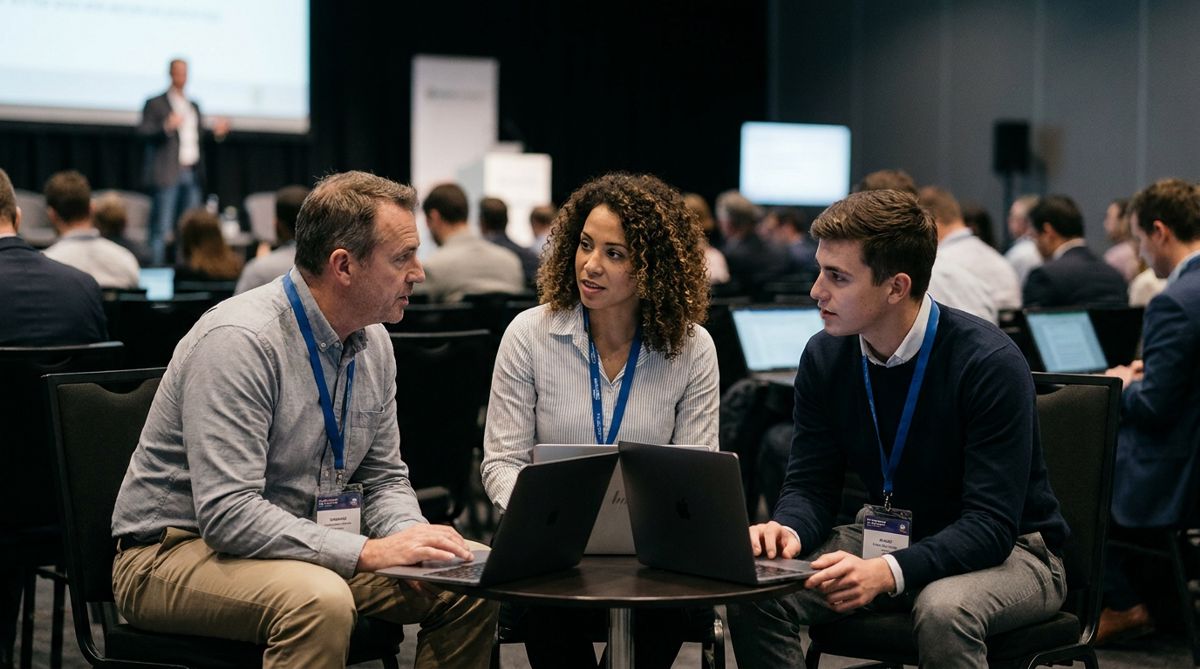
Presenting your business idea to investors is a high-stakes moment. You have a great pitch deck, but the slides are only half the story. The way you narrate it—the words you choose, the confidence you project—can make the difference between securing a meeting and getting a polite "no." For non-native English speakers, this challenge can feel even more daunting. This guide provides a slide-by-slide framework of what to say, helping you tell your story clearly and persuasively.
Before You Begin: The Foundation of Your Pitch
Before you even think about individual slides, a little preparation goes a long way. Getting these fundamentals right will make your entire narration stronger and more confident.
Know Your Audience
Are you speaking to angel investors, venture capitalists, or potential strategic partners? Research them beforehand. An investor with a background in deep tech will understand technical jargon that a generalist investor might not. Tailor your language and examples to their level of expertise and what you know about their investment thesis.
Craft Your One-Sentence Pitch
This is your anchor. It's the single sentence you can always come back to. It should clearly and concisely state what your company does, for whom, and what the main benefit is.
- Formula: We help [Target Customer] to [Solve a Problem] by [Your Secret Sauce].
- Example: "We help e-commerce businesses reduce cart abandonment by offering a one-click checkout solution."
Practice, Don't Memorize
Reading a script word-for-word sounds unnatural and inflexible. Instead, create bullet points with the key messages for each slide. Practice the flow of your story until it feels comfortable. This allows you to maintain eye contact, adapt to the audience's reactions, and sound like an expert, not a recording.
The Classic Pitch Deck: What to Say on Each Slide
Most early-stage pitch decks follow a similar structure. Here is a guide to narrating the typical 10-slide flow, with example phrases you can adapt.
Slide 1: Title / Cover
Goal: Start strong. Introduce yourself, your company, and state your purpose clearly.
- Opening: "Good morning. My name is [Your Name], and I'm the CEO of [Company Name]."
- The Hook: Immediately follow with your one-sentence pitch. "At [Company Name], we help restaurants reduce food waste with our AI-powered inventory management platform."
- Set the Agenda: "Over the next few minutes, I'd like to tell you how we're solving this critical problem and the significant market opportunity it represents."
Slide 2: The Problem
Goal: Make the problem feel real, urgent, and expensive for your target customer.
- Tell a Story: Start with a relatable scenario. "Imagine you're a restaurant owner. Every night, you're forced to throw away unsold food, which feels like throwing away money. This isn't a small issue; it's a daily reality for thousands of businesses."
- Quantify the Pain: Use your own research and data to show the scale of the problem. "The average restaurant loses thousands of dollars each month due to inefficient inventory management. This directly impacts their profitability in an already low-margin industry."
- Explain the Status Quo: "Currently, most owners rely on manual spreadsheets or guesswork, which is time-consuming and highly inaccurate."
Slide 3: The Solution
Goal: Introduce your product as the clear, elegant answer to the problem you just described.
- The Reveal: "This is exactly why we built [Your Product Name]."
- Simple Explanation: "Our solution is a simple SaaS platform that connects to a restaurant's existing sales system. It uses predictive analytics to tell owners exactly what to order and when."
- Connect to the Pain: "Instead of guessing, they get data-driven recommendations, which cuts down on waste and saves them money. We turn a major pain point into a competitive advantage."
Slide 4: How It Works / Product Demo
Goal: Show them your product is real and easy to use. Focus on the user's journey and the benefits.
- Keep it Simple: "Let me walk you through how it works in three simple steps."
- Step-by-Step Narration: "First, the restaurant manager connects their point-of-sale system, which takes about five minutes. Second, our algorithm analyzes historical sales data and predicts future demand. Finally, the system generates a prioritized shopping list, which they can access on any device."
- Highlight Key Benefits: "The key here is simplicity. Our dashboard highlights the top three actions they need to take each day to reduce waste, saving them hours of manual work."
Slide 5: Market Size
Goal: Show that the potential market is large enough to build a big company.
- Explain the Framework: "To understand the scale of this opportunity, we analyzed the market from a top-down perspective."
- Define Your Segments:
- "The Total Addressable Market, which includes all restaurants globally, is massive."
- "We are initially focused on the Serviceable Addressable Market, which for us is independent restaurants in North America and Europe."
- "Based on our go-to-market strategy, we project our Serviceable Obtainable Market, or our target for the first three years, to be a small but significant fraction of that."
- (Note: Always use credible, sourced numbers for your market sizes on the slide itself.)
Slide 6: Business Model
Goal: Explain clearly and simply how you make money.
- Be Direct: "Our business model is a straightforward monthly subscription."
- Explain the Tiers: "We offer three tiers based on the size of the restaurant. Our basic plan starts at $99 per month for small cafes, and our professional plan is designed for larger establishments. We also have an enterprise plan for chains."
- Show Value: "For our average customer, the monthly fee is less than 10% of what they save on food waste, providing an immediate return on investment."
Slide 7: Traction / Go-to-Market
Goal: Prove that your plan is working or that you have a credible plan to acquire customers.
- If you have traction: "We launched our private beta six months ago and have seen very positive signals. We now have 50 paying restaurants on the platform and are growing our revenue by 20% month-over-month with zero churn."
- If you are pre-launch: "Our go-to-market strategy is focused and capital-efficient. We will initially acquire customers through partnerships with restaurant associations and targeted digital advertising on platforms where owners spend their time. We already have a waitlist of over 200 restaurants."
Slide 8: Competition
Goal: Show you understand the competitive landscape and have a clear, defensible advantage.
- Acknowledge Others: "There are other companies trying to solve this problem, which validates the market need."
- Position Yourself: This is a great place for a simple 2x2 matrix on your slide. "We see the market along two axes: ease of use and prediction accuracy. While legacy systems are complex and require expensive consultants, and newer point solutions only focus on one part of the problem, we are unique in offering a solution that is both incredibly easy to set up and highly accurate."
| Feature | Competitor A | Competitor B | Your Company |
|---|---|---|---|
| Ease of Use | Low | High | High |
| Prediction Accuracy | High | Low | High |
| Focus | Large Chains | Cafes | All Independents |
- State your Differentiator: "Our key differentiator is our proprietary algorithm that is specifically trained on data from independent restaurants, making our predictions more relevant for them."
Slide 9: The Team
Goal: Convince investors that you are the right people to solve this problem and build this company.
- Focus on Relevance: "We believe we are the right team to win in this market because of our unique blend of experience."
- Introduce Key Members: "My co-founder, [Name], was a lead data scientist at [Previous Company], where she built predictive models for global logistics. My own background is in the restaurant industry; I managed my family's restaurant for ten years and experienced this problem firsthand."
- Connect to the Mission: "Our combined expertise in both technology and hospitality gives us a deep understanding of the customer and the ability to build a product they love."
Slide 10: The Ask & Use of Funds
Goal: Be specific about how much money you need and exactly how you will use it to achieve your next milestones.
- State the Ask Clearly: "We are raising a seed round of $500,000."
- Explain the Runway: "This investment will give us 18 months of runway to hit our key milestones."
- Detail the Allocation: "We will use the funds to expand our engineering team to build out our mobile app (40%), hire our first two sales representatives (35%), and increase our marketing efforts to accelerate customer acquisition (25%)."
- End with the Vision: "With this capital, we will be able to reach 1,000 restaurants and become the leading inventory solution for independent restaurants in the country. Thank you."
Handling Q&A in Your Second Language
The question and answer session is often where investors make their final judgment. It’s a test of your knowledge and your ability to think on your feet.
Listen Carefully and Clarify
Nerves and unfamiliar accents can make it hard to understand a question perfectly. Don't be afraid to ask for clarification. It shows you care about giving a precise answer.
- Phrases to use:
- "That's a great question. To make sure I understand, are you asking about our customer acquisition cost or lifetime value?"
- "Could you please say that again? The connection was a little unclear."
If you're presenting over a video call, tools that provide live transcription can be a great help. Seeing the words on your screen as they are spoken ensures you catch every detail, even with fast speakers or complex terminology. You can find more phrases for clarification in our guide to [/blog/english-phrases-clarifying-on-calls/](speaking up in meetings).
Prepare for Common Questions
You can anticipate most questions. Write down answers to the following and practice them:
- What is your customer acquisition cost (CAC) and lifetime value (LTV)?
- What is your churn rate?
- How will you defend against a large competitor entering your market?
- What are the key risks to your business?
- Why did you choose this business model?
Common Mistakes to Avoid
- Reading From a Script: It disconnects you from the audience. Use your slides and notes as a guide, not a teleprompter.
- Using Too Much Jargon: You might be an expert, but your investors may not be. Explain complex ideas in simple terms. The goal is clarity, not to sound smart.
- Apologizing for Your English: Never start by saying "Sorry for my English." Your accent is part of who you are. Your passion, expertise, and vision are what matter. Speak with confidence.
- Going Over Time: Respect your audience's time. Practice your pitch to fit within the allotted slot, usually 5-10 minutes, leaving ample time for discussion.
A successful pitch isn't about having perfect English; it's about telling a clear, compelling story that convinces others to believe in your vision. Preparation is the key to building the confidence to do that well.
If you're preparing for a high-stakes presentation, Subtl can help you feel more prepared. You can use the AI prompter to draft and refine your talking points for each slide, and its live translation can help you navigate the Q&A with confidence. Learn more about how founders use it for /use-cases/fundraising/.
pitch deckfundraisingpublic speakingenglish tips